


Choosing the right cooling system for your home is a significant decision that affects both your comfort and energy bills. If you're considering investing in a new system, you may find yourself torn between central air conditioning and mini-split systems. Both have their merits, and understanding them can help you make the best choice.
What is Central Air Conditioning?
Central air conditioning is a traditional cooling system common in many American homes. It uses a series of ducts to circulate cooled air throughout the house. Here's how it works:
- Outdoor Unit: The compressor and condenser are located outdoors.
- Indoor Unit: The evaporator coil resides inside, often in conjunction with your furnace or air handler.
- Ductwork: Extensive ductwork distributes cooled air to various rooms through vents.
Benefits of Central Air
Central air systems are popular for a reason. Here are some of their key benefits:
- Whole-House Cooling: Efficiently cools entire homes, maintaining a consistent temperature in every room.
- Aesthetically Pleasing: No indoor units or visible piping detract from your interior design.
- Higher Resale Value: Homes with central air often have a higher resale value due to widespread preference.
How Mini-Split Systems Work
Unlike central air systems, mini-splits function without ductwork, using separate indoor units to cool different areas. They consist of:
- Outdoor Unit: Housing the compressor.
- Indoor Units: Mounted in desired rooms and connected by a small conduit.
- Remote Control: Each indoor unit operates independently via a remote control or wall thermostat.
Advantages of Mini Splits
Mini-splits have gained popularity, especially for those seeking efficient, zone-controlled cooling:
- Energy Efficiency: Lack of ductwork means there's no energy loss in distribution.
- Zone Cooling: Customize temperatures in different rooms or areas independently.
- Easy Installation: Typically easier and faster to install than central air systems.
Energy Efficiency and Cost
Energy efficiency is a major consideration when choosing an air conditioning system, as it directly impacts your energy bills.
Central Air Energy Usage
Central systems can sometimes be less efficient due to duct loss. Up to 30% of energy can be lost through leaks, holes, or poorly insulated ducts. However, newer systems with advanced technology are improving these numbers.
Mini Split Efficiency
Mini-split systems typically offer higher efficiency rates. SEER (Seasonal Energy Efficiency Ratio) ratings for mini-splits can go above 20, while many central systems range between 13-16.
Cost Considerations
- Installation Cost: Central air installations, especially in unprepared homes, can be costly due to ductwork. Mini-splits, while cheaper to install (especially in ductless homes), come with higher per-room costs.
- Operational Costs: Mini-splits often result in lower utility bills because they allow for more efficient, targeted cooling.
Maintenance Requirements
Regardless of your choice, both systems require maintenance to function optimally.
Central Air Maintenance
- Regular Filter Changes: Dirty filters can impede airflow and efficiency.
- Duct Cleaning: Requires periodic cleaning to ensure efficient airflow and air quality.
- Professional Servicing: Yearly checks by professionals to ensure components like the blower and evaporator coil are operating effectively.
Mini Split Care
- Filter Cleaning: Easier to access and clean than ductwork systems.
- Routine Inspections: Check the outdoor unit for debris and clean the units regularly for efficient operation.
- Occasional Servicing: Professional checks, especially for refrigerant levels and electrical connections.
Which is Right for You?
Deciding between central air and mini-splits depends on various factors, including:
- Home Size: Larger homes might benefit from central air, while mini-splits are ideal for smaller homes or specific zones.
- Aesthetic Preferences: Central air offers no visible indoor units, while mini-splits are bulkier but more flexible in placement.
- Budget: Consider both upfront costs and long-term operational savings.
- Existing Infrastructure: Homes without existing ductwork might find mini-splits more cost-effective.
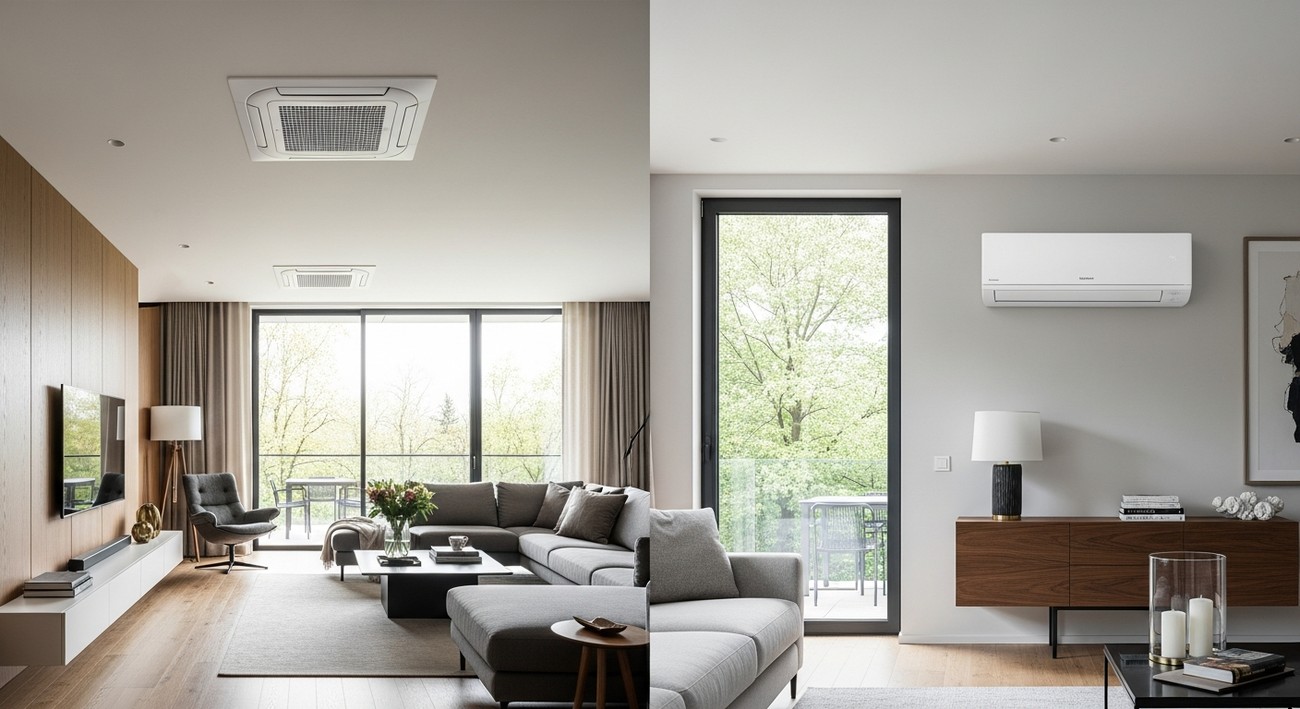
Central Air vs Mini Split: Frequently Asked Questions
How do central air systems function compared to mini splits?
Central air conditioning systems operate by using a large, central unit that cools air and distributes it through a network of ducts to different rooms in a building. This cooling method involves a consistent flow of cooled air, ensuring uniform temperatures throughout the space. On the other hand, mini split systems, also known as ductless mini splits, consist of an outdoor compressor and one or more indoor air-handling units. These systems cool spaces directly without the need for ductwork, allowing for individual temperature control in each room or zone and often providing greater flexibility in managing cooling costs.
Are mini splits more energy-efficient than central air?
Mini splits are often considered more energy-efficient than central air systems. Because mini splits provide targeted cooling to specific areas without using extensive ductwork, they eliminate the energy losses commonly associated with duct systems. Ducts can lose up to 30% of the cooling energy due to poor insulation or leaks, which mini splits avoid entirely. Additionally, the ability to cool individual zones as needed means that mini splits can operate more economically, potentially reducing overall energy consumption and utility costs.
Which system is easier to install: central air or a mini split?
Mini split systems are generally easier to install compared to central air systems. Installing central air requires running ducts throughout the home or building, which can involve significant remodeling and disruptions, especially in structures not initially designed for central air. Conversely, mini splits require only a small hole in the wall for the conduit, which houses the power cables, refrigerant tubing, and a condensate drain, making them much less invasive. This ease of installation makes mini splits particularly appealing for retrofitting older homes that lack existing ductwork.
Can I use a mini split system to cool multiple rooms?
Yes, a mini split system can be used to cool multiple rooms. Multi-zone mini split systems come with multiple indoor units that connect to a single outdoor unit, allowing different rooms or zones to be cooled independently. Each indoor unit can be operated separately, giving users the flexibility to adjust the temperature in each room according to individual preference and usage patterns. This capability makes mini splits a versatile cooling solution for homes with varying cooling needs.
Do central air systems offer better air filtration than mini splits?
Central air systems typically provide more robust air filtration options compared to mini splits. Because these systems are designed to circulate air through a network of ducts, they can incorporate high-efficiency air filters or whole-house air purifiers that trap dust, pollen, and other airborne particles, improving indoor air quality. Mini split systems do have filters, but they are generally less comprehensive than the filtration options available with central air systems. However, some higher-end mini split models offer advanced filtration features for improved air quality.
How do central air and mini split systems differ in maintenance requirements?
Maintenance requirements for central air and mini split systems differ primarily in complexity and frequency. Central air systems require regular maintenance of the ductwork, in addition to the standard servicing of the unit, such as changing filters, cleaning coils, and checking refrigerant levels. Duct cleaning is a crucial maintenance task that can be overlooked. Mini splits, devoid of ducts, place more emphasis on maintaining the outdoor compressor and the indoor units. Regularly cleaning or replacing filters, checking for blockages in the condensate line, and ensuring the outdoor unit is debris-free are typically sufficient to keep mini splits operating efficiently.
Are there noise differences between central air and mini split systems?
There are notable noise differences between central air and mini split systems. Generally, mini splits operate more quietly than central air systems. The indoor units of mini split systems are designed to be exceptionally quiet, with the noisy compressor components located outside the building. Central air systems, while having their compressors outside, can still transmit motor and airflow noise through the ductwork into the living areas, which can be more noticeable, especially older systems. This quieter operation can be a significant advantage of mini splits, especially in noise-sensitive environments.
Is one system better than the other for heating?
When it comes to heating, mini split systems that include heat pump capabilities can provide efficient heating as well as cooling, often reducing the energy consumption compared to traditional electric heating systems. Central air systems can also provide heating when paired with a furnace or a heat pump system; however, the efficiency can vary based on the existing heating infrastructure. Mini splits are often praised for their ability to quickly switch between heating and cooling modes and their efficiency, even in moderately cold climates.
Can I retrofit a mini split in a historical home instead of a central air system?
Yes, retrofitting a mini split system in a historical home is often a preferred choice. Mini splits are ideally suited for historical homes where the architectural integrity might be compromised by installing extensive ductwork required for central air systems. Since mini splits require only minor modifications to the building structure, they allow homeowners to maintain the original aesthetics and design features of a historical home while still enjoying modern climate control. This makes them an attractive option for preserving the character of older buildings while enhancing comfort.
How do central air and mini split systems impact home resale value?
Both central air and mini split systems can positively impact a home's resale value, though the extent can vary based on buyer preferences and regional climate. Central air systems might be more universally recognized by potential homebuyers due to their ubiquity, thus potentially offering broader appeal in areas where central systems are standard. However, mini splits can also add value, especially in regions where energy efficiency and zoning flexibility are highly valued. They can be particularly attractive to buyers looking for modern systems with advanced control and efficiency features.

Comparison
Key Features Comparison
| Feature | Central Air Conditioning | Mini-Split Systems |
|---|---|---|
| Installation Complexity | Complex and requires ductwork | Easier, ductless operation |
| Aesthetics | Discreet vents, more integrated look | Visible indoor unit per zone |
| Zone Control | Limited; requires additional systems to zone | Easy, inherent to the setup |
| Energy Efficiency | Generally lower; ducts can lose up to 30% energy | Often higher; no duct loss, inverter tech |
| Noise Level | Usually quieter inside, noisier outside unit | Quieter overall, but can vary by model |
| Customization | Limited; requires new ductwork for changes | Highly customizable with various units |
Performance Differences
Central Air Conditioning performs best in homes where ductwork is already established, allowing it to efficiently circulate air throughout the space. The system maintains a consistent temperature by drawing air through return and supply ducts, which are slightly more challenging to retrofit in older homes.
On the other hand, Mini-Split Systems provide targeted cooling, which means they can swiftly adjust the climate in individual rooms. This flexibility leads to potential energy savings, as you can cool only occupied spaces. Mini splits typically integrate inverter technology that adapts compressor speed for maximum efficiency and reduced power consumption.
Price Comparison
The cost of these systems can vary widely based on the specifics of the installation and the desired features.
| Price Factor | Central Air Conditioning | Mini-Split Systems |
|---|---|---|
| Initial Installation Costs | $3,000 - $7,000+ (depends on existing ductwork) | $2,000 - $5,000+ per zone |
| Maintenance Costs | Moderate (includes duct cleaning) | Lower (less maintenance) |
| Long-Term Energy Costs | Higher due to potential duct loss | Lower due to efficient operation |
Central Air Conditioning tends to have a higher initial expense, particularly if the home requires new ductwork installation. Meanwhile, Mini-Split Systems have lower startup costs when installing in small numbers but can quickly add up as more zones are required.
Best Use Cases
Central Air Conditioning is ideally suited for homes with existing ductwork or new-builds where ductwork installation isn’t a prohibitive factor. It offers whole-home climate control, making it ideal for larger homes where consistent temperature is necessary across multiple rooms.
Mini-Split Systems, with their flexibility and efficiency, shine in smaller homes, older buildings lacking existing ducts, or spaces like additions, garages, and basements. Their zoning capability is perfect for users who prefer different temperature settings in different areas, providing a tailored climate experience.
Bottom Line Recommendation
When it comes to choosing between central air and mini-splits, consider your home's layout, existing infrastructure, and your personal cooling needs. If you require a solution to cool a large home uniformly and already have ductwork, central air could be your best bet. Conversely, if you want control over different parts of your home, enjoy energy savings, or lack ductwork, mini-splits are worth considering. Both options have their strengths and are excellent in the right context, so think about your specific requirements to guide your decision.

Final Thoughts
When considering central air vs mini split systems, it’s essential to weigh your specific needs, preferences, and budget. Each option has its benefits, whether you're looking for the efficiency and coverage of central air or the flexibility and zone control offered by mini splits. In a place like Sacramento, CA, where temperatures can soar, having the right system can significantly enhance your comfort year-round.
We’re here to help you make an informed decision that best suits your home. If you have questions or need assistance in choosing the right cooling solution, feel free to reach out to us at AirFlow Heating & Air. Our team of local experts is ready to provide personalized advice and support, ensuring you find the perfect fit for your needs. Let's work together to keep your home comfortable!


